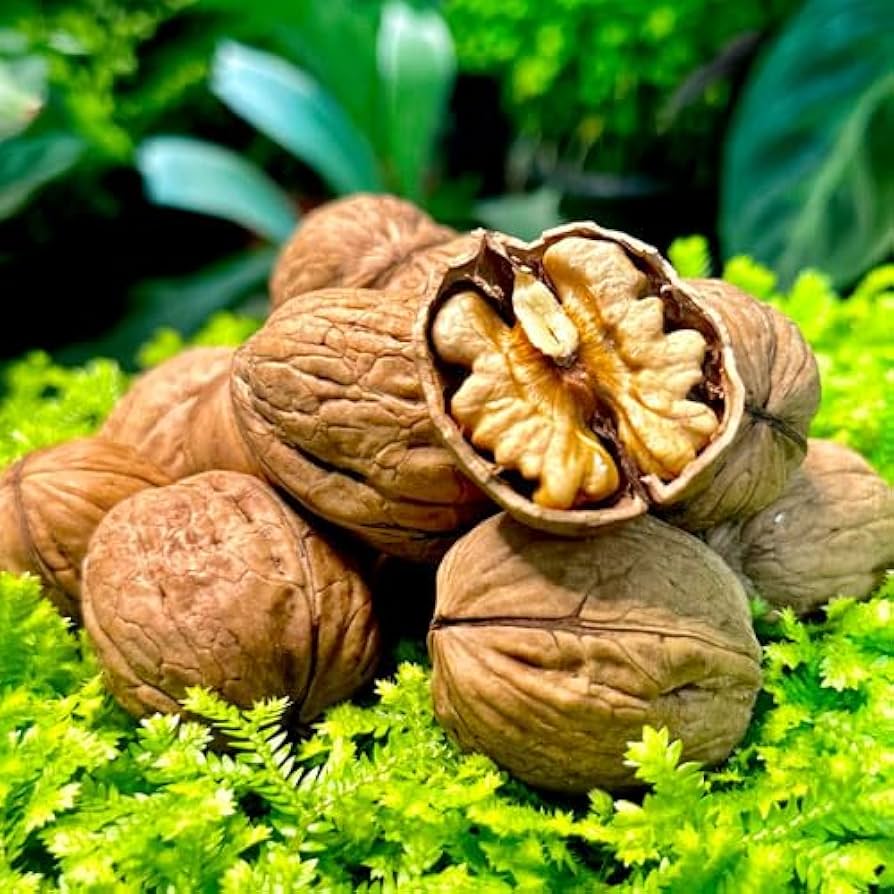
The walnut is one of the oldest crops cultivated by humankind. Azerbaijan is one of the centers of origin of this valuable tree and, to this day, preserves the tradition of growing high-quality walnuts.
Historical Background
According to botanical research, the walnut (Juglans regia) has grown in the territory of Azerbaijan since ancient times. Wild groves of this tree can still be found in the country's mountain regions, indicating the natural origin of the crop in this region.
Over the centuries, local farmers selected the best trees for seed material, forming unique local varieties adapted to specific climatic conditions. These varieties are distinguished by high yields, excellent kernel quality, and resistance to local pests and diseases.
Traditional Varieties of Azerbaijani Walnut
A number of valuable walnut varieties and forms have developed in Azerbaijan, of interest both for local production and for breeding work. Each variety has its own unique characteristics and areas of application.
Large fruits with a thin shell. The kernel is light-colored, oily, and has an excellent taste. The trees are high-yielding and frost-resistant.
Medium-sized nuts with a distinctively pointed shape. Known for stable yields and drought resistance.
Medium-sized fruits, with a kernel that separates easily from the shell. High oil content and rich aroma.
A large-fruited variety with a thick yet easily crackable shell. The kernel is light-colored, sweet, and without bitterness.
Modern Cultivation Technologies
Traditional walnut-growing methods in Azerbaijan are gradually being complemented by modern agrotechnical practices. This helps increase yields, improve fruit quality, and make production more efficient and sustainable.
Site Selection and Soil Preparation
Walnut trees are demanding regarding soil conditions. The best results are achieved on fertile, well-drained soils with a neutral or slightly alkaline reaction. The site should be sheltered from cold winds.
Planting Seedlings
Modern grafted-variety seedlings ensure earlier fruiting and guaranteed fruit quality. Planting takes place in autumn or early spring, following an 8×8 or 10×10 meter spacing scheme.
Crown Formation
Proper pruning in the tree's first years shapes a productive crown with good light penetration to the interior. This directly affects yield and fruit quality.
Orchard Care
Regular watering in the first years, timely fertilization, and pest and disease control are the keys to healthy trees and stable harvests.
Walnut Processing
The quality of the final product is largely determined by processing technology. Modern Azerbaijani enterprises use advanced technologies to produce goods that meet international standards.
Main processing stages:
- Receiving and sorting: the fruits are graded by size, and damaged specimens are rejected.
- Drying: reducing moisture to 8-10% ensures long-term storage without loss of quality.
- Cracking: modern cracking machines ensure minimal kernel breakage.
- Kernel sorting: by color, size, and integrity for different product categories.
- Packaging: packaging in various formats — from retail packs to bulk bags for wholesale supply.
Walnut Products
The walnut is a versatile product used across various sectors of the food industry. Azerbaijani producers offer a wide range of products for different market segments.
- Shelled kernels: whole and broken kernels of various grades for the confectionery industry and retail trade.
- Walnuts in shell: the traditional product format for retail customers.
- Walnut oil: a valuable product for cooking and cosmetics, rich in polyunsaturated fatty acids.
- Shell: used as an abrasive material, for producing activated carbon and decorative items.
Industry Development Prospects
The walnut is a promising crop for the development of Azerbaijan's agricultural sector. Growing global demand for this product creates opportunities to increase production and export volumes.
Key areas of development include establishing new plantations using high-yielding varieties, modernizing processing facilities, and promoting the Azerbaijani walnut brand in international markets.